

Zipcar has announced that it plans to cease its UK operations — a significant moment for car sharing, even though the service operates almost entirely within London. For many Londoners, Zipcar is the default car-club option: the one with bays on residential streets, cars a few minutes’ walk away and a booking process people could do without thinking. And despite its London-only footprint, Zipcar has long been the most widely recognised car-club brand in the UK. That brand awareness makes its proposed exit feel bigger than the geographical area it actually serves.
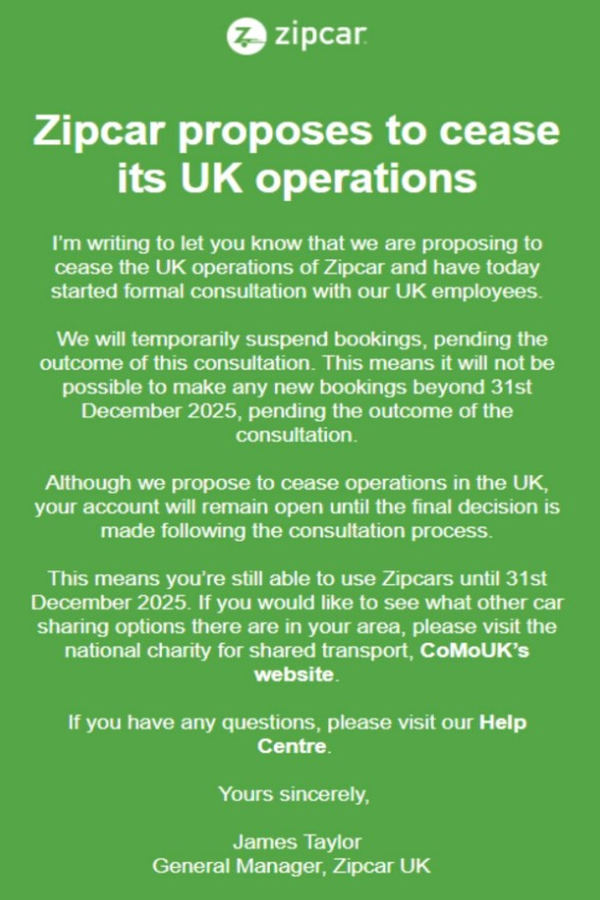
The company has started a formal consultation with its UK staff. While the final decision will be confirmed once that process concludes, the proposal is clear: Zipcar intends to leave the UK market. As part of this, the service has frozen bookings beyond 31 December 2025. Members can continue using cars until the end of this year, and existing reservations will be honoured, but the long-term outlook is clear.
Why Zipcar Is Leaving
According to the company, the UK operation has become too expensive to run. Costs have risen sharply over the past few years — not just for insurance and maintenance, but for powering one of the largest electric car-club fleets in the country. Energy prices climbed significantly, and keeping a London-wide EV network charged and ready proved far more expensive than before.
Travel habits have also changed. Post-pandemic working patterns, cost-of-living pressures and a shift in how often people take short trips all played a part in weakening demand. On top of that, regulatory changes are about to make things even harder. From 2026, London’s congestion charge is due to apply to electric vehicles, removing one of the big cost advantages of running a low-emission shared fleet. When combined with an annual loss of more than £11 million, the numbers stopped adding up.
What It Means For Members
Members can continue using Zipcar until the end of 2025, but no new bookings can be made beyond that point. Zipcar has already signposted people towards CoMoUK — the national shared-transport charity — to help them find alternative services in their area. It’s uncommon for a major operator to point customers directly towards competitors, but it reflects the reality of the situation: the service is preparing to close, and users will need to plan ahead.
There are also a few technical details current members should be aware of.
Zipcar has confirmed that members on monthly or annual plans will receive pro-rata refunds for any unused portion of their membership once operations formally end. The company also states that prepaid driving credit, unused time credit and paid-for packages will be refunded, provided they apply beyond the closure date. Existing bookings up to 31 December 2025 will still go ahead, and any bookings scheduled beyond that date will be cancelled and refunded.
At this stage, it’s sensible for members to download their account history, check any outstanding credit, and avoid renewing long-term memberships that extend past 2025.
What It Means For Car Sharing In London

Zipcar’s departure is significant, but its impact is concentrated in London. For residents who rely on shared cars for errands, family visits, weekend trips or occasional transport, Zipcar’s network has provided a level of convenience that smaller operators have not yet matched. Losing that network will leave a noticeable gap, especially in neighbourhoods where Zipcar’s presence has effectively normalised car-club use.
It also raises questions about the sustainability of large car-club fleets in a single city. Zipcar had the scale, the brand recognition and the backing of an international parent company — yet even that wasn’t enough to withstand rising costs, regulatory shifts and changes in member behaviour.
A Turning Point For Shared Mobility In The Capital
Car sharing in London will continue, and some operators are likely to see increased demand as Zipcar winds down. But the withdrawal of the city’s largest and best-known car club marks a clear turning point. It shows that even well-established operators are vulnerable to the economic and regulatory pressures shaping urban transport.
Zipcar’s service remains available for now, but its long run in London looks to be coming to a close. When 2025 ends, the city’s shared-mobility landscape will look very different — and the most recognisable name in UK car clubs will no longer be part of it.