

Bluecity had a clear and ambitious goal: to bring all-electric, one-way car sharing to London, using a fleet of distinctive red EVs that could be picked up and dropped off around the city.
The scheme launched in 2017 but was closed down on 10 February 2020 after just under three years of operation.
How Bluecity Worked
Bluecity was a point-to-point service operating in London that used the Bolloré Bluecar, an electric vehicle developed by the French industrial group Bolloré. Users could pick up a car in one borough and drop it in another; unlike many traditional car clubs which require the car to be returned to a bay, Bluecity aimed to offer greater flexibility. The service started in April 2017 and ran in boroughs such as Hammersmith & Fulham and Merton.
Membership, booking via an app, and recharging infrastructure were all part of the offering, but the scheme operated in a challenging environment.
The Rise and Expansion
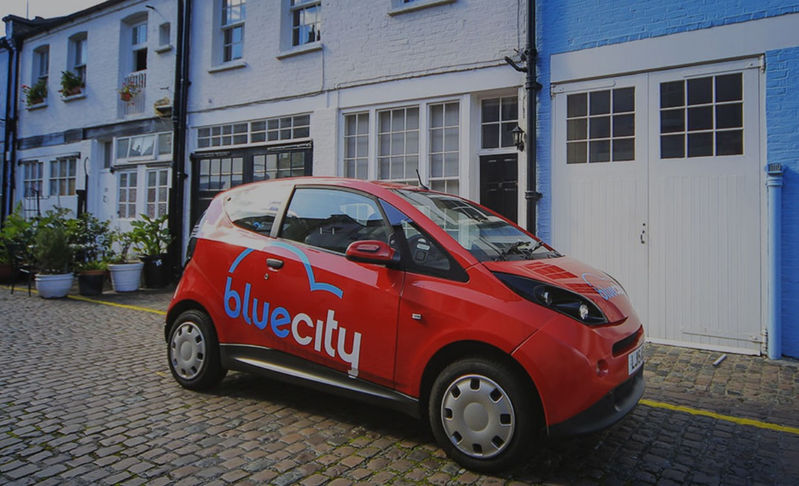
After its launch in 2017, Bluecity gained attention as one of the most visible electric car-sharing schemes in London. It expanded to include operations at Gatwick Airport, and billed itself as part of the move towards zero-emission urban mobility.
The concept aligned with aggressive policy goals around reducing vehicle emissions and shifting urban transport. However, the early momentum faced multiple operational headwinds.
Why Bluecity Closed
Bluecity ceased operations on 10 February 2020. According to the company, the closure came because the network remained too small and the business environment too competitive. The company cited the cost of operation, the complexity of working with multiple boroughs, and low uptake as key reasons.
Key factors that led to the shutdown include:
- Despite the ambition, the service reached agreements with only three of London’s 33 boroughs, limiting its scale and access.
- The cost of starting and maintaining a one-way electric car-share model proved high: vehicle acquisition, charging infrastructure, parking bays and logistics all added up.
- Uptake was lower than needed to justify the investment. At a rate of about £5 for half an hour hire, the model struggled to overcome London traffic, low average trip speeds, and the high fixed cost base.
- The point-to-point model increased operational complexity (fleet relocation, charging scheduling, parking bay availability) compared to round-trip models.
- Policy and infrastructure hurdles: negotiating access with many local authorities slowed rollout of charging and parking infrastructure.
What Bluecity’s Story Means For Car Clubs
Bluecity’s failure doesn’t cast doubt on electric car clubs in general, but it underlines some very real challenges:
- Offering free-floating or one-way electric car-sharing at scale in dense urban environments may have higher fixed costs and operational complexity than initially anticipated.
- Achieving sufficient scale (fleet size, geographic coverage, frequent rentals) is critical to make one-way models viable.
- Coordination with local authorities — parking, charging points, zoning — can make or break a service that spans multiple jurisdictions.
- Electric car sharing as a business demands high utilisation and low downtime; unless the network is broad and flexible enough for spontaneous user behaviour, uptake may lag.
Final Word
Bluecity entered the London car-share market with strong intent: electric vehicles, on-demand one-way use, a cleaner alternative to private car ownership. It operated from April 2017 to February 2020, but ultimately closed because it was unable to scale to a profitable level in the context of high costs, limited local authority buy-in and lower than expected user uptake.
For CarClubs readers, the lesson is this: electric and one-way car sharing is appealing in theory. But crossing the gap between appeal and sustainable business requires operational scale, broad coverage, coordination with stakeholders and realistic expectations about cost and complexity. Bluecity was ahead of its time.