
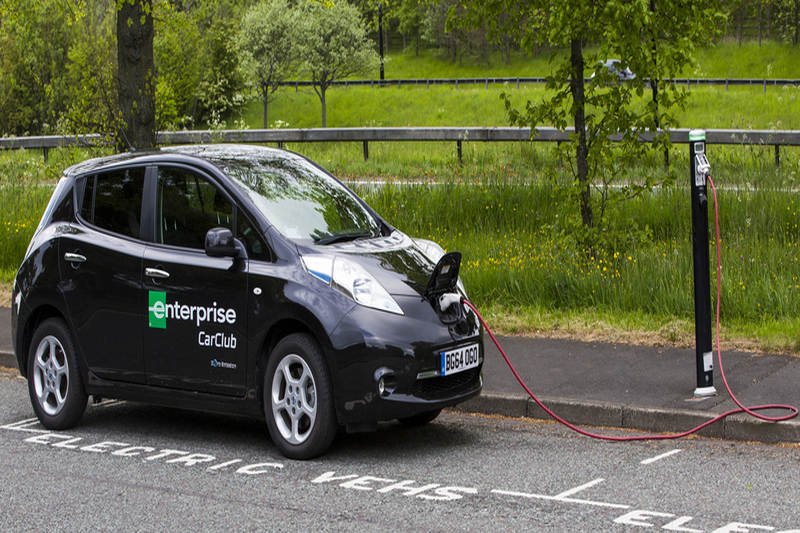
Electric cars have gone from niche to normal in UK car clubs. Most major operators now offer at least some electric vehicles (EVs), but they differ a lot in how many they provide, where they’re available, and how charging works in practice.
This guide looks at which UK car clubs currently have the strongest electric offering, then explains how charging works when you are using an electric club car, and what that means for cost and convenience.
Electric Club Cars In A Nutshell
In a car club, an electric vehicle works much like any other shared car: you book it by the hour or day, unlock it with an app or smartcard, and return it to its bay (or somewhere within a flexible zone, depending on the scheme).
The key differences compared with petrol or diesel club cars are:
- You are dealing with battery range instead of a fuel gauge
- Instead of petrol stations, you use dedicated charge points
- Charging costs are normally covered by the club, but the process varies by operator
Because of this, the best electric club for you will depend on where you live*, how much EV availability you want, and how confident you feel about public charging.
*It is generally true to say that bigger cities will have more options when it comes to public charging points, but smaller towns are starting to catch up as well. So don’t automatically assume that your options are limited if you live outside of a metropolis.
Who Offers Electric Club Cars In The UK?
Several UK car clubs now advertise electric or plug-in hybrid vehicles. The three most significant for most drivers are Zipcar, Enterprise Car Club and Co Wheels.
Zipcar: Strong Electric Coverage In London
 Zipcar has been an early adopter of electric club cars in the UK. A government toolkit on car clubs notes that around 30% of the Zipcar Flex fleet in London is electric, with the operator managing recharging centrally rather than expecting members to plug in after every trip.
On top of this, Zipcar has built large batches of shared EVs around specific models, such as its Volkswagen e-Golf fleet, which has been described as one of the biggest shared electric vehicle fleets in the country.
Key points for Zipcar and EVs:
- Best for: London and the surrounding area
- Fleet: Mix of electric and petrol vehicles, with a significant share of EVs in Flex (one-way) cars
- Model: Back-to-bay and Flex (one-way) car sharing
- Charging: For many EVs, Zipcar organises recharging when batteries fall below a set level; in some cases members can charge and claim credit back, with guidance provided via the app and website
If you are in London and want regular access to electric club cars for urban journeys, Zipcar is one of the strongest options in terms of sheer visibility and ease of finding an EV.
Enterprise Car Club: Widest Nationwide Network With Growing EV Choice
 Enterprise Car Club positions itself as the UK’s largest car sharing network, with more than 1,300 cars and vans available across over 220 towns and cities. Its fleet includes petrol, hybrid and fully electric vehicles, and the company has worked with a number of local authorities to roll out EV bays.
Enterprise’s own material highlights that members do not pay separately for fuel or electricity; instead, energy costs are covered through the per-mile charge, and electric vehicles are supplied with a dedicated charge card and cable.
Key points for Enterprise Car Club and EVs:
- Best for: Nationwide access, especially outside London
- Fleet: 1,300+ vehicles including electric and hybrid models, placed in many more towns and cities than most rivals
- Model: Back-to-bay car and van sharing
- Charging: Most EV bays have a dedicated charge point; drivers use a charge card from the glovebox and return the car plugged in, with electricity bundled into mileage charges
If you want the option to drive electric in lots of different parts of the UK, and you like the idea of a single national membership, Enterprise is currently one of the most practical choices.
Co Wheels: EV-Focused Social Enterprise For Smaller Cities
 Co Wheels is a community interest company with a strong emphasis on low-emission vehicles. The operator describes its fleet as one of the greenest in the UK, with around one-third of its cars and vans electric or hybrid.
Local authorities have partnered with Co Wheels to deliver electric car clubs in towns and smaller cities such as Plymouth and Poole, often as part of wider sustainable transport schemes.
Key points for Co Wheels and EVs:
- Best for: Smaller cities, university towns and areas where Co Wheels has specific EV partnerships
- Fleet: 700+ vehicles nationwide with a high proportion of electric and low-emission models
- Model: Back-to-bay, with a mixture of petrol, hybrid and full electric vehicles
- Charging: EVs are supplied with network charge cards (for example, ChargePlace Scotland or Charge Your Car); electricity is usually included, and drivers follow in-car instructions for using local charge points
Co Wheels is a strong option if your priority is low-emission vehicles and you live somewhere that does not have Zipcar but does have Co Wheels bays.
Which Car Club Has The Best Electric Options?
There is no single operator that is “best” for every driver. Based on publicly available information, the picture looks roughly like this:
- Best for electric club cars in London: Zipcar, thanks to a high proportion of EVs in its Flex fleet and a long-running focus on electric models.
- Best for electric access across the widest spread of UK locations: Enterprise Car Club, because of its 1,300+ vehicle network covering more than 220 towns and cities, with electric and hybrids included.
- Best for electric availability in smaller cities and specific council-backed schemes: Co Wheels, which has actively deployed EV-heavy fleets in places like Aberdeen and Plymouth and continues to position itself as an EV-friendly car club.
For most members, the real deciding factors are:
- Where you live and work
- How often you can realistically book an EV rather than a petrol car
- Whether you need one-way flexibility (Zipcar Flex) or are happy with back-to-bay schemes
- How confident you are about public charging
In practice, someone living in central London who wants to use electric cars for short city trips will usually get more EV choice from Zipcar. Someone in a regional town may find that Enterprise or Co Wheels is the only realistic way to access shared EVs locally.
How Charging Works
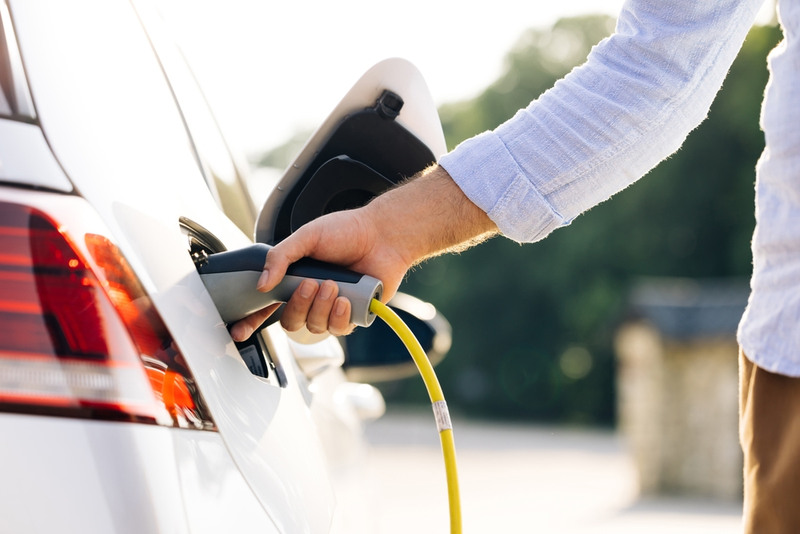
Charging is the main way in which electric club cars differ from their petrol equivalents. Petrol and diesel club cars usually come with a fuel card; if you need to refuel, you use that card and the cost goes back to the club.
With EVs, the principle is similar – the club pays – but the process varies.
In all cases, there are some basics:
- Cars have a charging port instead of a fuel filler
- You plug in using either a cable supplied with the vehicle or a tethered cable attached to the charge post
- Public charge points are activated with a card or an app
- The UK now has tens of thousands of public charge points, and apps such as Zapmap and others help you find them
Where club drivers differ from private EV owners is that you generally do not set up your own charging account. Instead, the club gives you a card that is already linked to its account, or asks you to pay and then reimburses you.
Charging With Enterprise Car Club
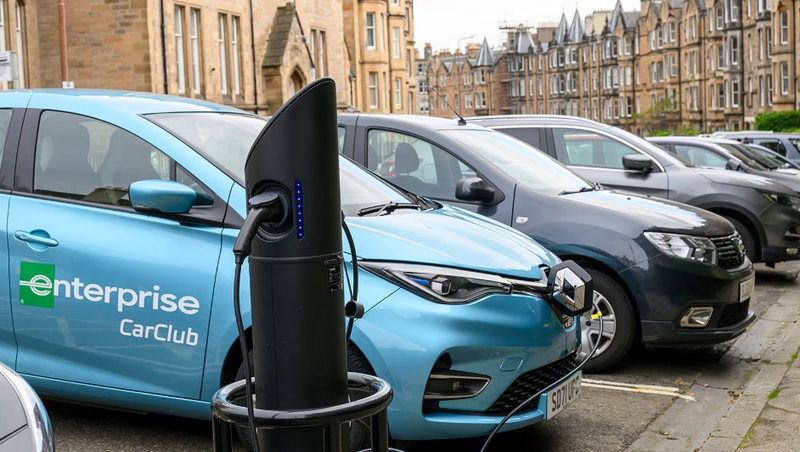
Enterprise’s guidance emphasises that electricity costs are bundled into its mileage fees for car club vehicles. Members use a dedicated charge card supplied with each electric club car to pay for public charging, and most EV bays have a specific post to use when you return the vehicle.
If a charge card fails or you have to pay for charging out of your own pocket, Enterprise allows drivers to claim back the cost by submitting a VAT receipt through the app.
In practical terms, that means:
- You do not need your own EV charging subscription
- You should return the vehicle plugged in at its bay whenever possible
- You still pay attention to range, but you are not personally paying for electricity
Charging With Co Wheels
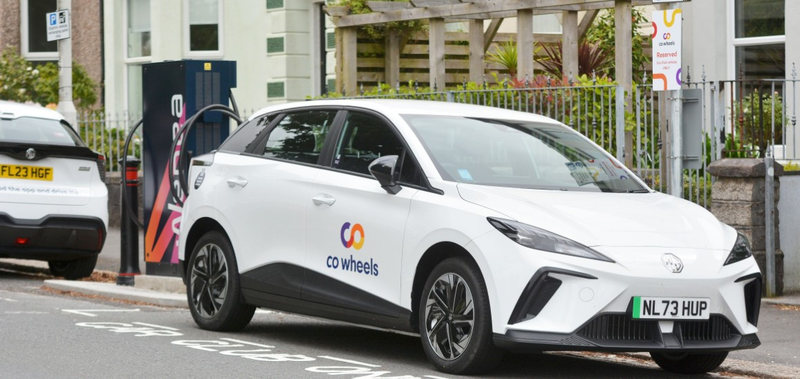
Co Wheels tends to rely on local charging networks agreed with councils or regional schemes. In Scotland, for example, Co Wheels provides ChargePlace Scotland cards for free charging on that network, and in other areas it uses Charge Your Car or similar systems.
The club’s instructions usually ask drivers to:
- Use the supplied card to start and stop charging
- Plug in at designated bays when returning the vehicle
- Follow in-car guides for any location-specific rules
Again, the electricity cost is covered by the operator, not by individual members.
Charging With Zipcar

Zipcar’s charging model is slightly different. For petrol vehicles, fuel cards in the car cover refuelling costs. For electric cars, Zipcar notes that the same approach is not always possible, so the company uses a mix of centrally managed charging and member-initiated charging with reimbursement.
Key points from Zipcar’s EV guidance:
- Many EVs, especially in the Flex fleet, are recharged by Zipcar staff when the battery falls below a certain level, and cars are removed from the app if the charge is too low
- For longer trips, Zipcar encourages members to plan where they will charge and provides advice and links to charging maps
- In some cases, charging costs can be reclaimed or even rewarded as driving credit if members return cars with a high state of charge
From a member’s perspective, this can make electric Zipcars feel more like “just another car” for short London journeys, because you are often not expected to handle charging at all.
Practical Tips For First-Time Electric Club Drivers
If you have not driven an EV with a car club before, a few simple habits make the experience smoother:
- Check the remaining range before starting your trip and make sure it comfortably covers your distance plus a margin
- Familiarise yourself with the charge card in the glovebox and any instructions in the car or app before you need them
- Use a charging map app to identify rapid chargers on your route if you are going further afield
- Allow extra time on longer journeys in case a charger is busy or out of service
- Return the car with at least the minimum charge level requested by the operator, and plugged in if there is a dedicated bay
None of this is complicated, but it is different from driving a petrol club car where you only think about fuel when the gauge is low.
Choosing The Right Electric Car Club For Your Journeys
The underlying pattern with electric club cars is the same as with car clubs in general.
Car clubs are set up for short journeys, lower mileage and flexible, often short-notice bookings, particularly in inner cities. Their pricing and fleet strategies reflect that: high availability in urban areas, strong integration with public transport, and models that work well for local trips rather than long-distance driving.
Within that, Zipcar, Enterprise Car Club and Co Wheels each take a slightly different approach to electric vehicles:
- Zipcar aligns its electric offering with dense London usage and one-way city travel
- Enterprise uses EVs as part of a broad national network designed to give members low-emission options almost anywhere they go
- Co Wheels focuses on greener fleets and council-backed schemes in smaller cities and towns
Traditional car hire, by contrast, is still set up for longer, well-planned trips anywhere in the country, often over several days. If you want an electric vehicle for a holiday in Devon or a week-long business trip, a standard hire from a rental branch may still be more suitable than a club booking, both in terms of range planning and cost.
So the best way to think about electric club cars is this:
- For short urban journeys, errands, and spontaneous trips where you like the idea of driving electric, a car club can be an excellent fit
- For longer, cross-country drives or multi-day use, traditional electric car hire is often the better tool for the job
Where you live, how far you plan to travel, and how often you want to use an EV will determine which operator – and which model – makes most sense for you.