

WhizzGo was one of the UK’s earliest modern car clubs and, for a while, a familiar sight in a string of cities across the country.
Founded in 2004 and based in Leeds, it offered a straightforward pay-by-the-hour service built around low-emission Citroën cars parked in dedicated on-street bays.
It arrived at a time when car sharing was still a fairly new concept for most people, and it quickly carved out a reputation for being practical, accessible and environmentally minded.
How WhizzGo Worked
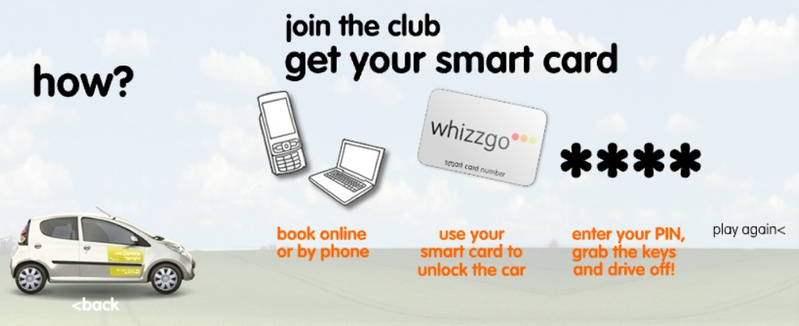
The basics were simple. Members paid a joining fee, a small monthly charge and then booked cars by the hour or day whenever they needed one. Insurance, fuel, maintenance and tax were included, and London members didn’t have to worry about the Congestion Charge either. Access was through a smartcard and PIN system that let you unlock the car, grab the keys from the glove box and set off — a smooth, fairly high-tech process for its time.
What gave WhizzGo a bit of personality was its focus on low-emission driving and its habit of working closely with councils and transport bodies. Its compact Citroën fleet fitted neatly into city-centre streets, and the company positioned itself as the cleaner, more sensible alternative to owning a car in busy urban areas.
Growing Across The UK
From its base in Leeds, WhizzGo expanded steadily throughout the mid-2000s. The company built a presence in more than a dozen towns and cities, placing its cars where local authorities were keen to support lower-emission travel. Its Citroën fleet turned up in places such as Sheffield, Liverpool, Manchester, Birmingham, Edinburgh and Brighton, giving WhizzGo one of the most geographically varied networks of any UK car club at the time.
This reach made it a practical option for people who wanted the same membership to work across several locations. The company’s close partnerships with councils helped it secure well-placed bays and integrate into wider transport plans. WhizzGo also earned industry recognition for its low-emission focus, which was unusual enough in the mid-2000s to give the brand a clear identity during a period when most car clubs were still experimenting with their offering.
Financial Trouble And A Relaunch
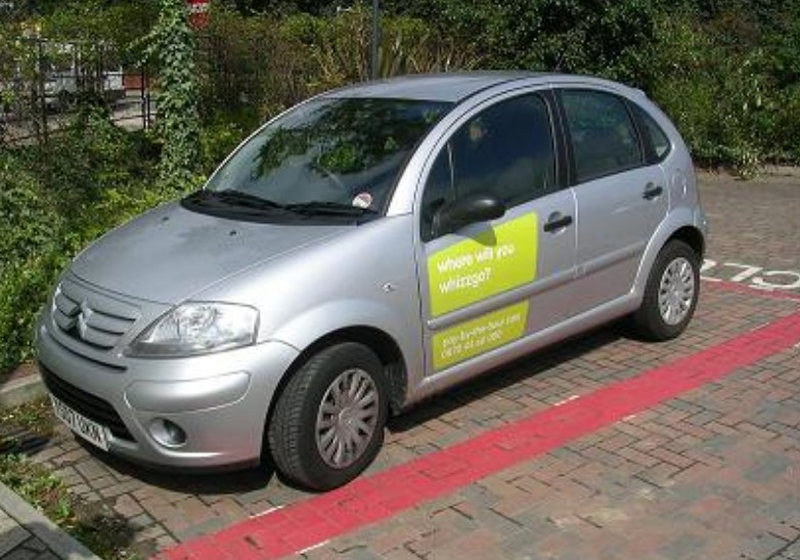
Despite the expanding footprint, WhizzGo struggled to make the business sustainable. Running a dispersed fleet across so many cities required significant operational support, and the revenue from hourly rentals wasn’t enough to balance those costs. In August 2008, the company entered administration.
The collapse didn’t mark the end straight away. New investors bought the business out of administration, kept the Leeds team in place, and relaunched the operation under the name WhizzGo Europe. The car club continued to operate in the same cities with the same bays, vehicles and access technology. For members, very little changed on the surface — but the relaunch made it clear that the previous financial model had reached its limit, and the pressure had not gone away.
Joining City Car Club
A year later, in August 2009, WhizzGo’s independent chapter closed for good when it was acquired by City Car Club. The move combined two of the UK’s biggest early car-sharing networks into what was then the largest hourly rental operation in the country. Around 500 cars and roughly 16,000 members were brought under the same umbrella, and WhizzGo’s locations were gradually rebranded.
The WhizzGo name disappeared soon after the takeover. While the service itself lived on through City Car Club — and later through the chain of acquisitions that eventually led to Enterprise Car Club — WhizzGo as a standalone brand was quietly retired.